
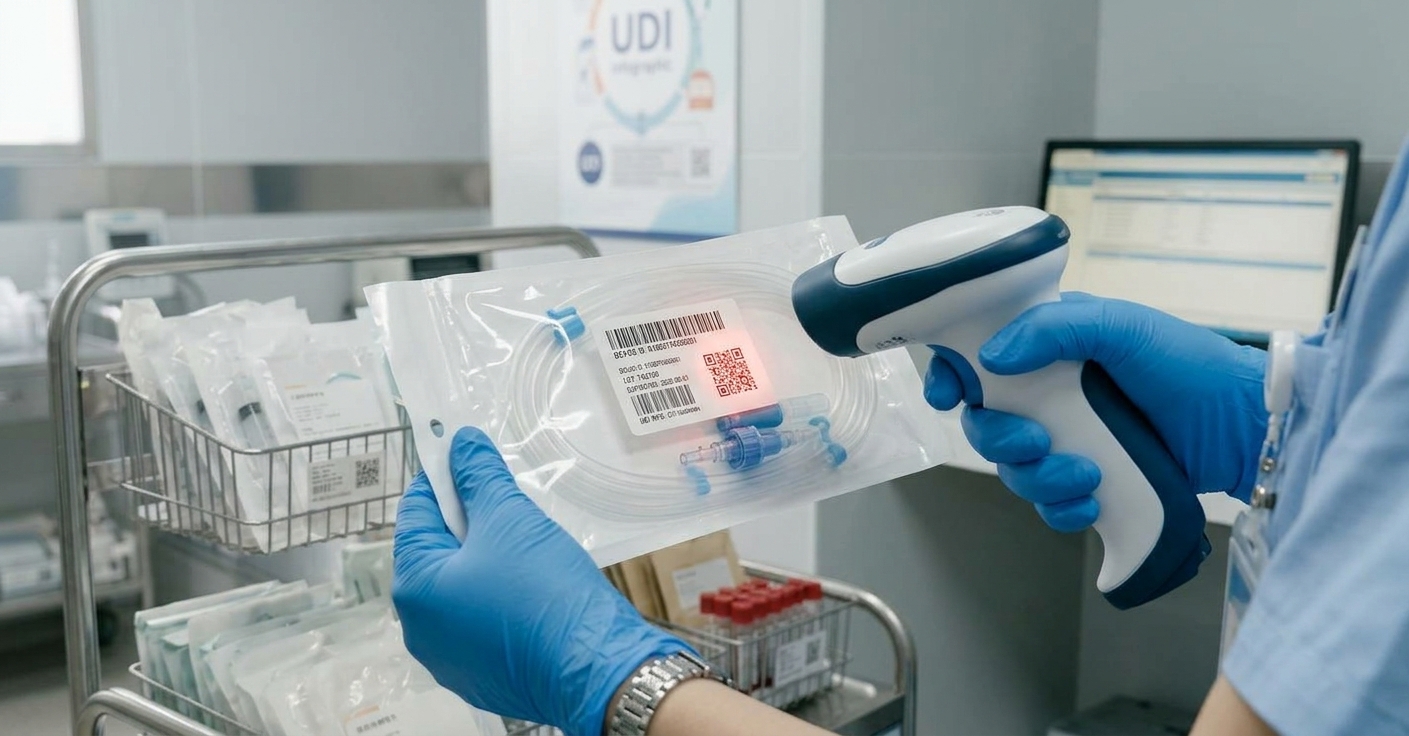
From 1 June 2027, UDI requirements in China will be extended to all Class II Medical Devices (including Class II IVDs) and all Class I IVDs manufactured from that date onwards.
The requirement is set out in NMPA Announcement No. 21/2026, published on 4 March 2026 by the relevant Chinese authorities.
UDI in China: key deadlines
The implementation of UDI in China has taken place in successive phases:
- 1 January 2021: first phase covering 69 categories of high-risk Class III devices;
- 1 June 2022: extension to the remaining Class III devices, including IVDs;
- 1 June 2024: extension to 103 selected categories of Class II devices;
- 1 June 2027: all remaining Class II devices, including Class II IVDs, and Class I IVDs manufactured from that date;
- 1 June 2029: remaining Class I devices manufactured from that date onwards.
For the newly affected categories, Announcement No. 21/2026 establishes a criterion based on the date of manufacture: devices manufactured before 1 June 2027 may not have a UDI, while devices manufactured on or after 1 June 2027 must be identified in accordance with the applicable requirements.
What does UDI in China mean for manufacturers from 2027?
UDI implementation involves more than simply applying a code to the product or label. For devices subject to UDI requirements from 1 June 2027, the registrant or filing entity will need to manage the Device Identifier (UDI-DI) and the related data in the systems required under Chinese regulations.
In particular, Announcement No. 21/2026 provides for:
- Registration: for new applications submitted from 1 June 2027, the Device Identifier (UDI-DI) of the minimum sales unit must be entered into the relevant registration system.
- UDI database: before placing the device on the market, the Device Identifier (UDI-DI) and related data for the minimum sales unit and higher packaging levels must be uploaded to the UDI database, in accordance with the applicable standards and specifications. The data must be true, accurate, complete and traceable and, where changes occur, must be updated before the device is placed on the market.
- Data alignment: where device information is already included in the databases of the National Healthcare Security Administration (NHSA), UDI data must be integrated and kept consistent across the relevant systems.
For international manufacturers, these requirements involve reviewing not only device identification, packaging and printed materials, but also data management, update workflows and alignment with the regulatory and coding systems used in China. Having a UDI system already implemented in other markets does not automatically ensure compliance with Chinese requirements; the necessary adjustments therefore need to be assessed on a case-by-case basis.
To prepare for 1 June 2027, it is advisable to:
- map the device portfolio intended for the Chinese market;
- verify device classification and the UDI implementation timelines;
- analyse the Device Identifier (UDI-DI) and the different packaging levels;
- identify the data to be submitted to the systems required under Chinese regulations;
- check any exemptions or specific requirements applicable to individual devices.
Announcement No. 21/2026 also refers to NMPA Announcement No. 15/2026, which sets out specific circumstances in which UDI implementation may be exempt.
UDI in China should therefore be approached as a regulatory project involving data, packaging, information systems and internal processes, rather than simply as a label change. Early planning helps identify potential issues and allows the necessary activities to be organised in good time.
UDI and GMP requirements: two aspects to consider in the Chinese market
The extension of UDI forms part of a broader strengthening of the requirements applicable to Medical Devices in China. From 1 November 2026, the new Good Manufacturing Practice (GMP) for Medical Devices will enter into force, introducing updated requirements for quality management, risk management and control throughout the device life cycle. NMPA has also recently published guiding principles for GMP inspections.
For manufacturers operating in the Chinese market, UDI, quality and traceability therefore require a coordinated approach, both from a regulatory and an operational perspective.
>>> Complife supports manufacturers entering the Chinese market through regulatory consulting, UDI support and testing services for Medical Devices.
Sources
- NMPA – Announcement No. 21/2026: Implementation of UDI for subsequent categories of Medical Devices
- NMPA – Announcement No. 15/2026: UDI requirements for specific cases
- NMPA – Rules for Unique Device Identification System
- NMPA – Good Manufacturing Practice for Medical Devices
- NMPA – Guideline for Inspection under the Medical Device Good Manufacturing Practices


